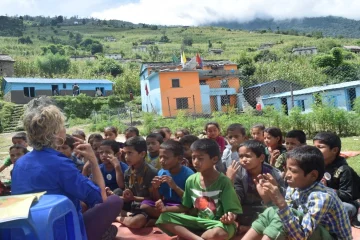

Nepal’s geography is as beautiful as it is challenging. While the peaks of the Himalayas inspire the world, the valleys and remote ridges often create significant barriers for the children living there. Despite a national push for literacy, rural students still face a “mountain” of obstacles.
At NSDF, we’ve spent 31 years navigating these challenges. Here are the five biggest hurdles we see today—and our grassroots strategy to overcome them:
1. The “Distance” Barrier In districts like Kavrepalanchok or Dhading, many students walk up to three hours just to reach a classroom. This physical exhaustion leads to high dropout rates.
-
NSDF Solution: We focus on building and supporting schools within the heart of these communities, reducing travel time and keeping children in school.
2. Shortage of Qualified Teachers A school building is just a shell without a teacher. Rural areas often struggle to attract and retain skilled educators due to isolation.
-
NSDF Solution: We have built a network of 230+ dedicated teachers. We provide ongoing in-service training so that rural teachers feel supported and equipped with modern pedagogical skills.
3. The Digital Divide As the world moves online, remote Nepali villages often lack electricity, let alone high-speed internet.
-
NSDF Solution: While we work toward digital integration, we prioritize “Low-Tech, High-Impact” tools—quality textbooks, physical libraries, and teaching aids made from local materials.
4. Socio-Economic Pressures For many families, a child’s labor at home or in the fields is seen as more immediate than the “distant” benefit of an education.
-
NSDF Solution: We engage with parents through community awareness programs, showing that an educated child is the best long-term investment for a family’s economic stability.
5. Outdated Infrastructure Many rural schools lack basic amenities like clean drinking water or separate toilets for girls.
-
NSDF Solution: Our infrastructure projects aren’t just about classrooms; we ensure schools have the sanitation facilities necessary to keep students healthy and dignified.